
Context is repeatedly rebuilt
Clinicians search for the same patient in multiple systems and manually reconstruct what matters for the current task.
CareStrand is the clinical context, workflow and application-governance layer that helps clinicians work across fragmented records and approved tools—without replacing the systems that remain authoritative.
The public website and workspace show a product prototype. Production connectors, formal assurance and live clinical deployment are not yet available.
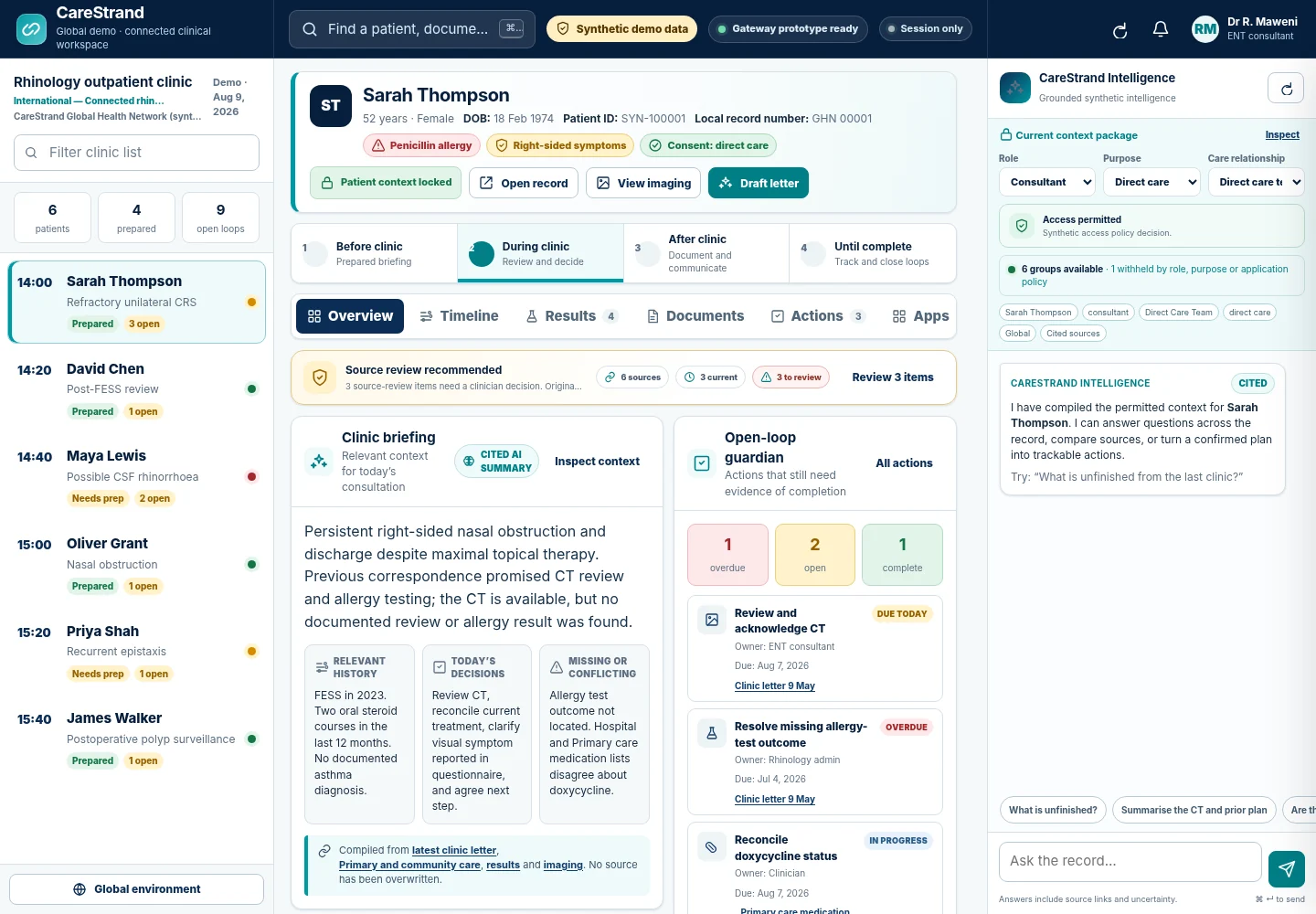
A single appointment may require repeated searches across order communications, imaging, letters, theatre records, primary care, community systems and new clinical applications.
Clinicians search for the same patient in multiple systems and manually reconstruct what matters for the current task.
Results, referrals, letters and follow-up promises can sit in different queues with unclear ownership and completion.
AI, monitoring and specialist applications often need separate integrations and governance for every organisation and record system.
CareStrand turns a fragmented environment into one coherent clinical workflow while preserving source provenance and human control.
Bring together approved information and launch routes across hospital, primary, community, patient and specialist systems.
Compile the minimum relevant context for the clinician, task and approved application—with citations back to source.
Draft, review, approve and track work across systems without giving AI or browser automation unrestricted authority.
Patient, encounter, role, purpose, application, sensitivity and provenance are combined to create a minimum-necessary context package.
CareStrand extracts and confirms actions, assigns ownership, watches connected systems for evidence and escalates unresolved work.
Ambient documentation, evidence assistants, diagnostic AI, monitoring, pathway and patient tools receive only the permissions they are approved to use.
The clinician interface keeps identity, source evidence, open actions and context controls visible. Technical integration detail is progressively disclosed only when it is needed.
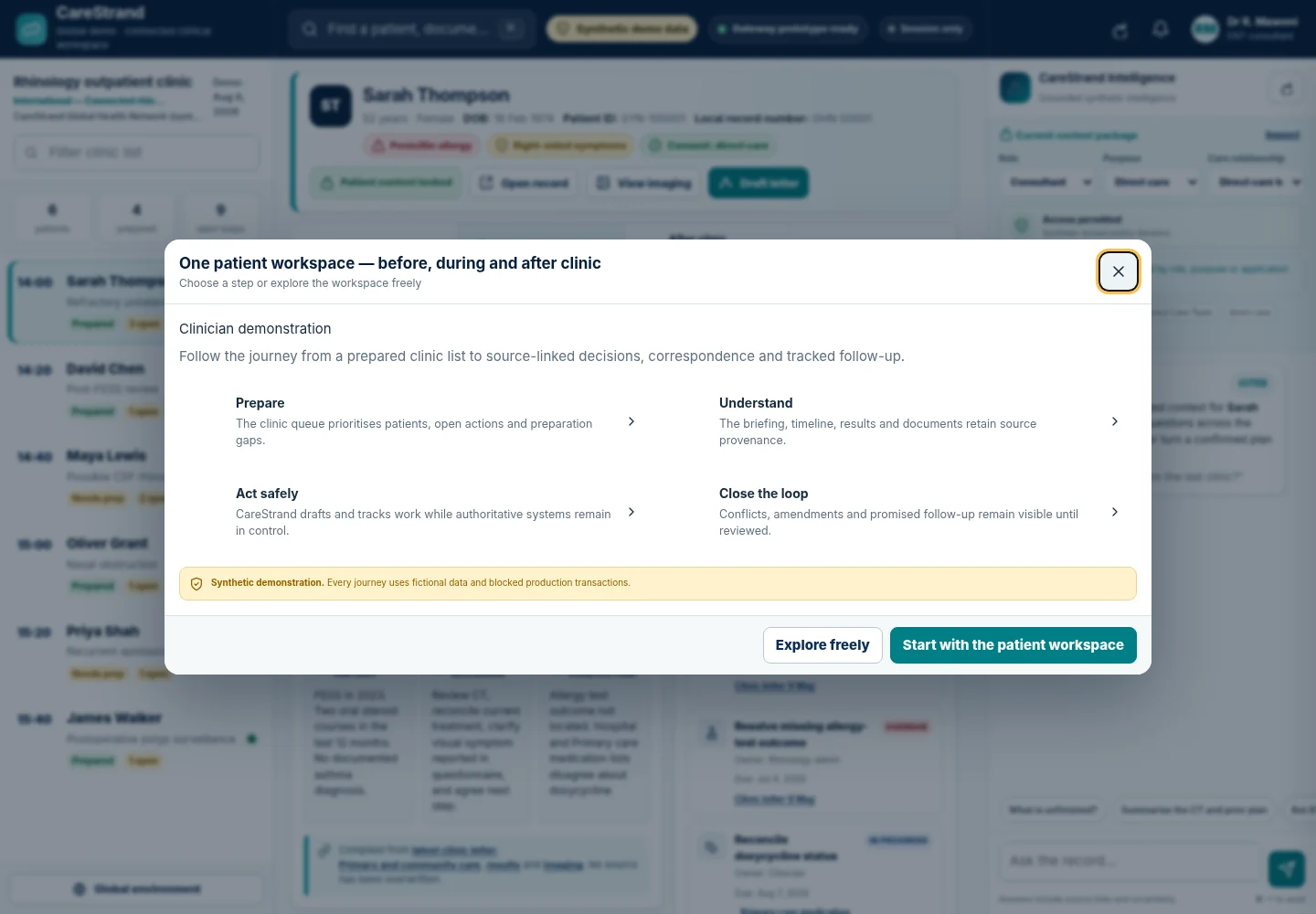
CareStrand is designed to limit context before an AI or connected application receives it, keep source systems authoritative, and retain evidence of every governed action.
Context is assembled according to role, purpose, task and approved application—not copied indiscriminately.
Every clinical statement can retain its source, version, status, freshness and amendment history.
Clinical content and actions remain drafts or suggestions until an appropriately authorised person reviews them.
Access, context, application, model, approval and write-back evidence can be retained as structured receipts.
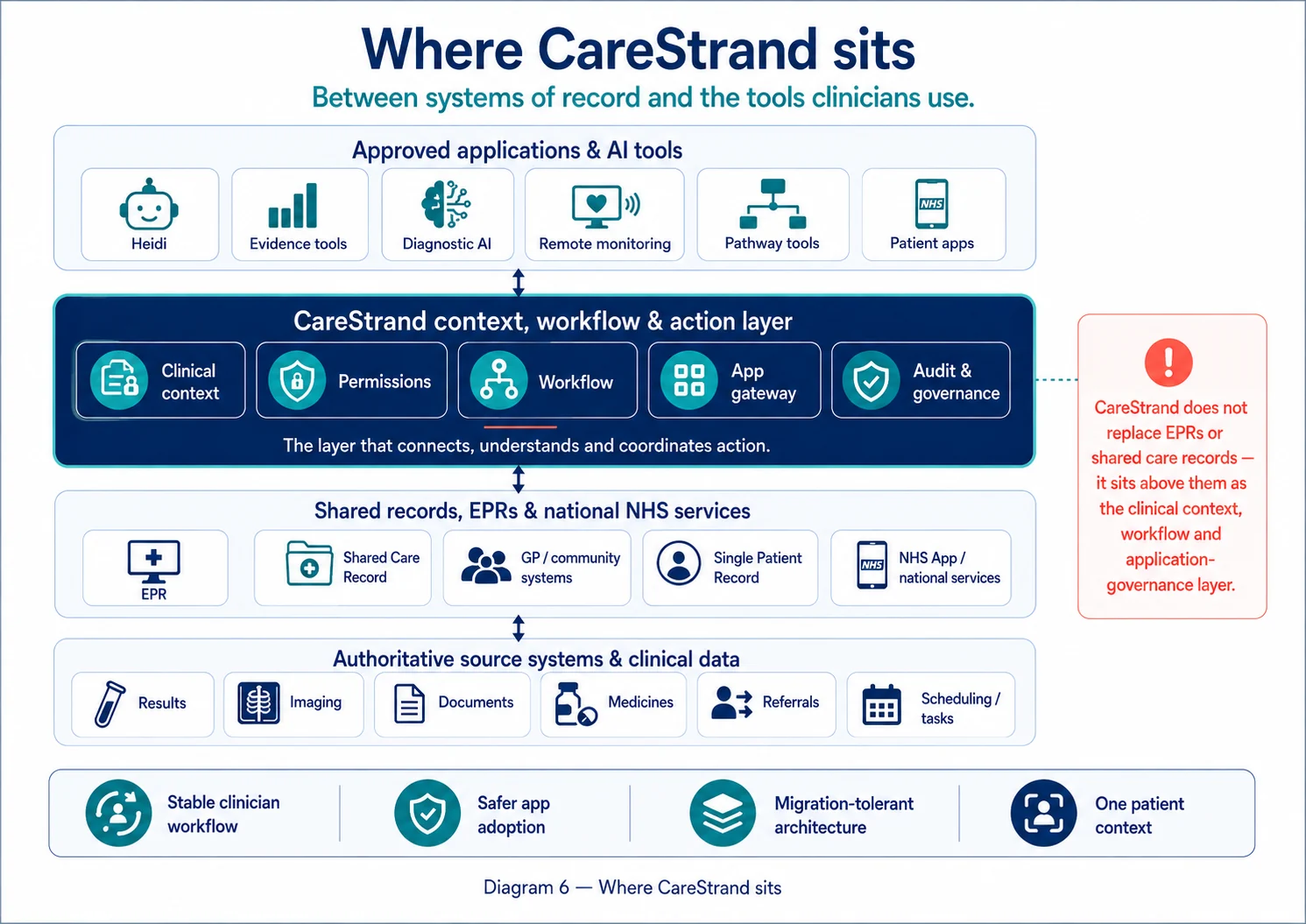
CareStrand separates the global product from local identity, terminology, privacy, integration and pathway requirements.
Speak to us about a synthetic demonstration, a bounded non-production integration, a clinical workflow pilot, or connecting an approved application through the CareStrand gateway.
Clinical workflow, interoperability, source trust and governed AI—written for teams trying to make fragmented healthcare systems work as one.
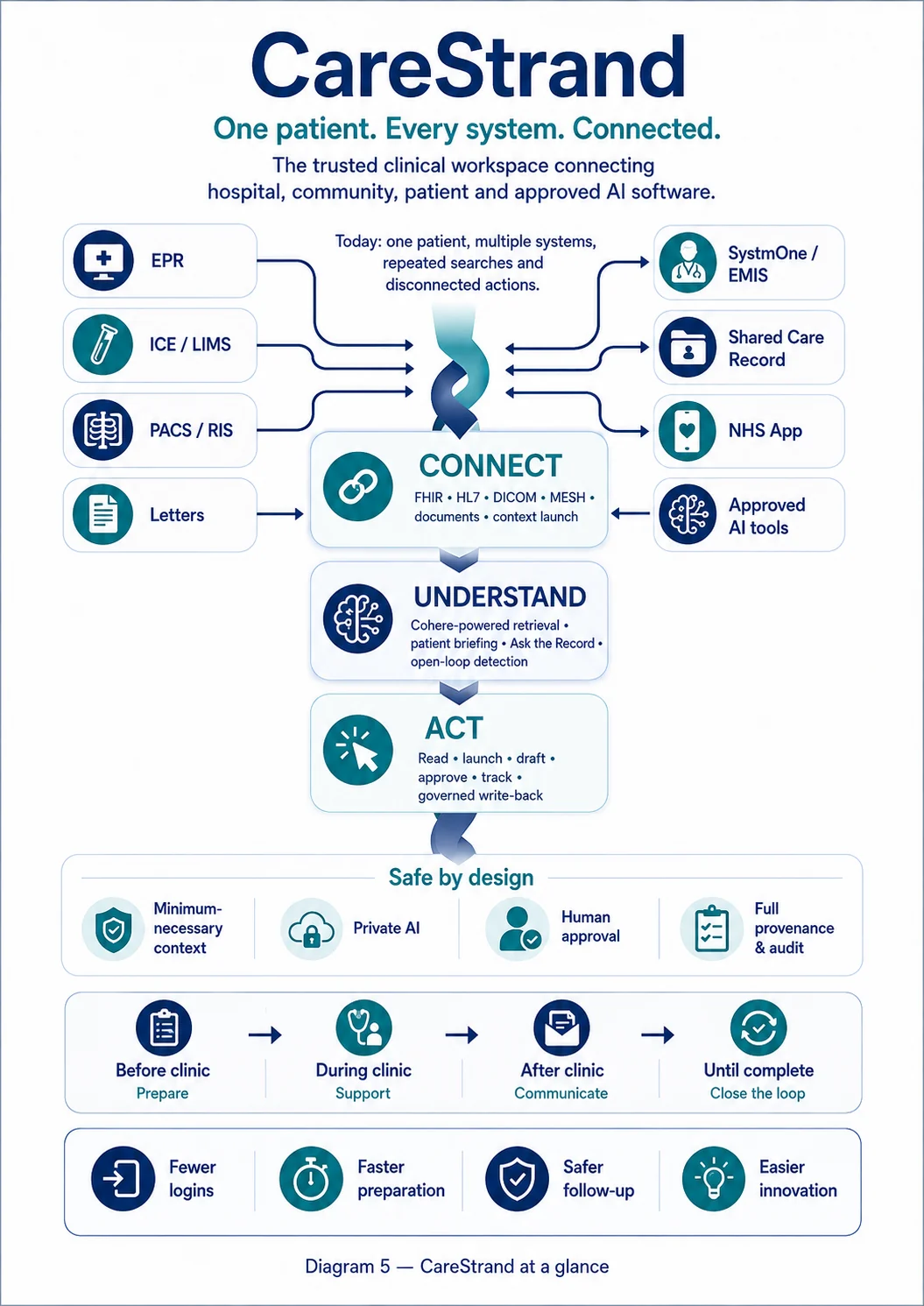
The interface is the easy part. Identity, source authority and accountable action are where the real work begins.
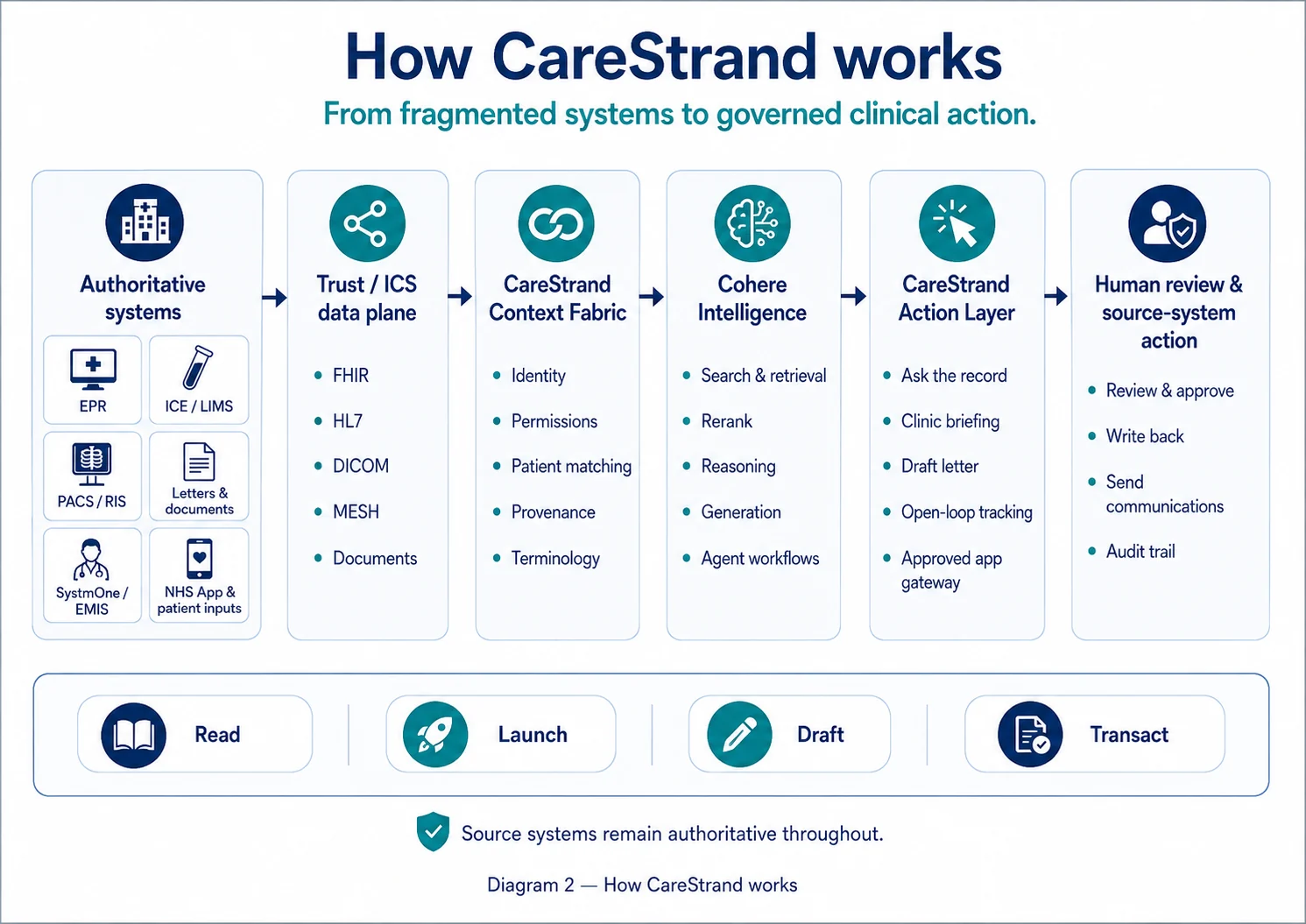
The context layer decides which information is relevant, permitted, source-linked and usable for the task.
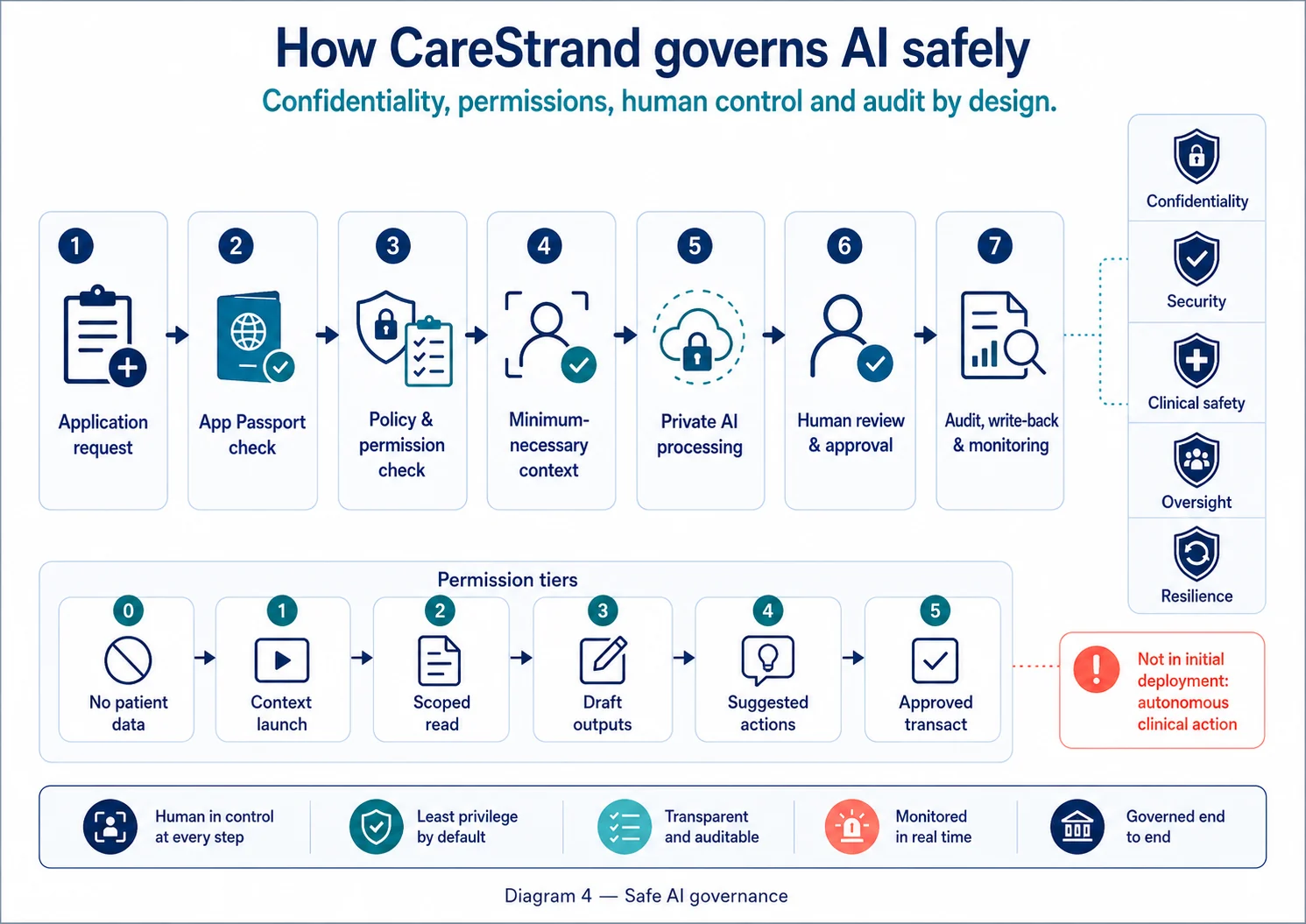
One permission model for documentation, diagnostics, evidence, monitoring, pathways and future agents.
CareStrand is currently a synthetic prototype for demonstration and product development. It is not connected to production clinical systems and must not be used with identifiable patient information or for clinical decision-making.